Turning Farm Data Into a Competitive Advantage
Modern agriculture produces more data than ever before, from precision equipment and soil sensors to market price feeds and weather forecasts. But data alone doesn’t drive performance. The real value lies in how that information is collected, interpreted, and acted upon.
That’s where agribusiness analytics comes in. These tools enable farm operators, merchandisers, and agribusiness managers to move from reactive decisions to proactive strategies. By tracking performance across crops, fields, and contracts, analytics helps identify trends, manage risk, and uncover opportunities that traditional record‑keeping might miss.
This article examines how agribusiness analytics works, what areas it enhances most, and why now is the ideal time to make data‑driven decision‑making a core part of your operation.
What Is Agribusiness Analytics?
Agribusiness analytics refers to the use of data analysis tools and technologies to monitor, evaluate, and optimize agricultural business operations. This includes financial performance tracking, market forecasting, yield benchmarking, contract management, and customer relationship tracking.
Unlike manual spreadsheets or isolated records, analytics platforms consolidate multiple data sources into a unified, real‑time view of farm or business health. This provides leaders with actionable insights for profitability, efficiency, and risk mitigation.
Where Analytics Delivers Measurable Impact
- Financial Performance and Cost Tracking
Analytics systems aggregate income, input costs, equipment expenses, and debt data to reveal true profitability at the crop, field, or enterprise level. Instead of relying on assumptions, managers gain visibility into actual margins, helping prioritize where to invest, expand, or reduce spending. - Market Intelligence and Price Forecasting
Grain markets are more dynamic than ever. Platforms that integrate real‑time futures, basis trends, and historical data give producers and merchandisers the ability to identify optimal marketing windows.
BungeAg’s grain marketing tools help producers monitor market conditions and develop data‑driven pricing strategies that strengthen margins. - Yield and Agronomy Benchmarking
Comparing yield performance across fields, seasons, and crop types allows operators to pinpoint what’s working and what needs adjustment. Analytics can reveal yield drivers — such as fertility, seeding rate, or rainfall — enabling agronomic refinements that increase productivity and input efficiency year over year. - Risk Assessment and Management
From weather volatility to commodity price swings, agriculture inherently involves risk. Analytics tools help quantify exposure and simulate different outcomes to improve planning. When integrated with formal hedging or insurance tools, analytics strengthens financial resilience.
Explore Bunge FRM for structured, data‑driven risk management programs tailored to producers. - Customer and Contract Visibility
For elevators and grain merchandisers, analytics delivers transparency into customer trends, open contracts, and delivery timelines. This insight supports better forecasting, stronger customer relationships, and smoother operational workflows, which are valuable advantages in a competitive marketplace.
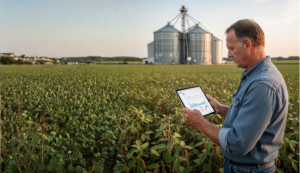
Building a Culture of Data‑Driven Decision‑Making
Adopting analytics isn’t just about tools, it’s about habits. The most successful operations commit to:
- Regularly reviewing key performance indicators (monthly or quarterly, not just at year‑end)
- Setting measurable benchmarks and tracking progress over time
- Training teams to interpret insights and act on them
- Integrating analytics with existing platforms like farm management systems or CRM tools
Starting small works. Even simple dashboards tracking cash flow, contract positions, or storage utilization can create immediate clarity. The goal is consistency. Making data review a routine part of management, not an afterthought.
From Article 1 in This Series:
Smart financial planning starts with understanding your full cost structure. Analytics tools simplify this process by unifying that information in one place. Explore “Cultivating Agribusiness Success: Smart Financial Planning Strategies for Resilient Farms” for foundational strategies that complement analytics adoption.
Technology as an Enabler, Not a Replacement
Some producers worry analytics tools may be too complex or disconnected from daily operations. Fortunately, today’s platforms are designed for usability, offering intuitive dashboards and mobile access.
From BungeAg mobile apps to online portals, analytics has never been more accessible.
These technologies don’t replace the instincts and experience of seasoned farmers; they reinforce them. When analytics validates what your intuition already suggests or highlights something unexpected, it enhances confidence and sharpens decision quality.
The Path Forward
Agriculture is a data‑rich industry where valuable insights often go untapped. By embracing agribusiness analytics, producers and agribusiness managers gain a clearer understanding of performance, risk, and opportunity, positioning their operations for sustainable growth.
Whether you’re just beginning to explore analytics or want to expand existing capabilities, now is the time to make data‑driven decision‑making a central pillar of your business strategy.
Learn more about BungeAg’s solutions and resources that support smarter grain marketing and stronger agribusiness management.